
GEMBA-OS™ | Connecting the Knowledge Buried in the Gemba to Your Company's Future
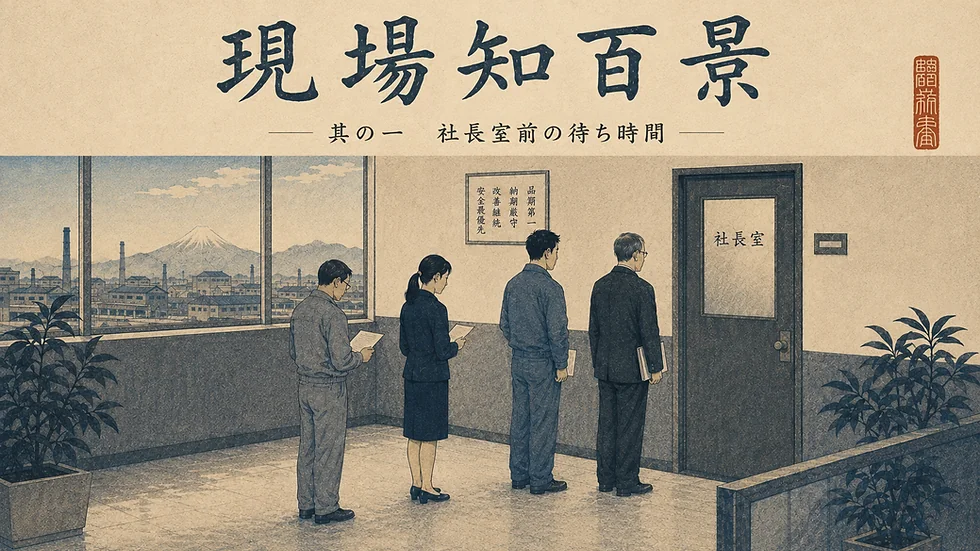
One Hundred Scenes of Gemba Knowledge, No. 1: The Wait in Front of the President's Office
Your company, too, has
a “scene” that has no name yet.
Even if no one is actually standing in line, a company where the final decision always ends up with the same person has a similar kind of “waiting time.” Let us begin by looking together at the scenes in your own company.
Do any of these scenes look familiar?
What happens looks different from company to company.
But step back a little, and you may see a similar structure.
Look for the one scene that makes you think, “We have that too.”
One Hundred Scenes of Gemba Knowledge, No. 1: The Wait in Front of the President's Office
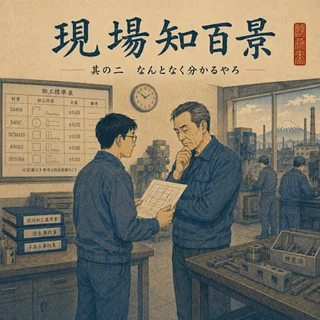
One Hundred Scenes of Gemba Knowledge, No. 2: “You Just Kind of Get It, Don't You?”
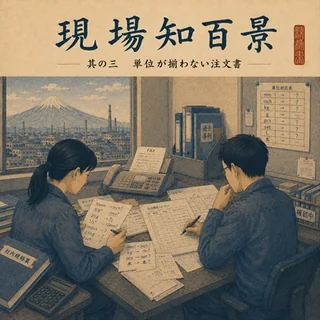
One Hundred Scenes of Gemba Knowledge, No. 3: Order Forms with Inconsistent Units
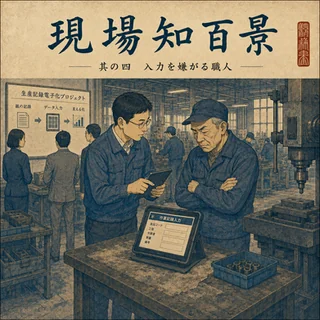
One Hundred Scenes of Gemba Knowledge, No. 4: The Craftsman Who Hates Data Entry
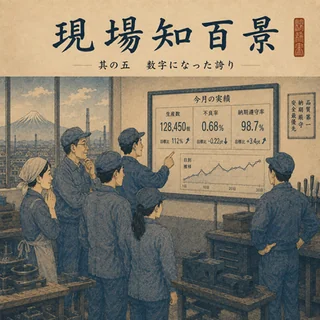
One Hundred Scenes of Gemba Knowledge, No. 5: Pride, Turned into Numbers
They may look like separate problems, but their roots may be connected.
It may not be the problems — it may be that the “connections” are not in view.
Only the president can make the decision.
The veterans' intuition cannot be passed on.
Each department uses different words.
Even when AI reads the materials, it cannot be put to use in real work.
Each one looks like a separate problem.
But what the company looks at, and the standards by which it judges,
and who absorbs the fluctuations at the gemba, may all be out of view —
and they may be born from that same structure.
Before blaming people, take another look at the relationships that make the work hold together.
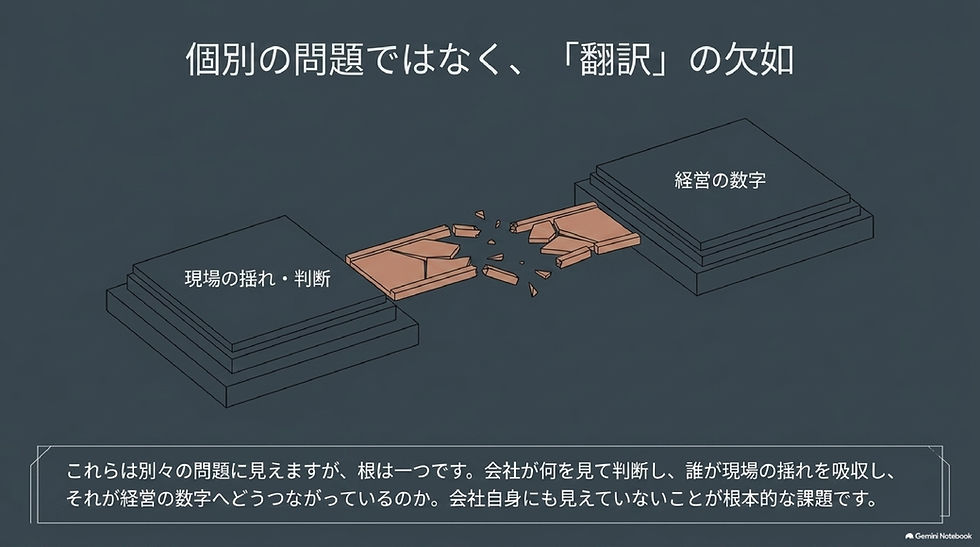
Not Individual Problems, but a Missing “Translation”
What Is GEMBA-OS™?
It finds the judgments, experience, records, figures, and relationships scattered throughout the company,
and nurtures them into knowledge that people and AI can keep on using.
Introducing AI is not, in itself, the goal.
First, we make it visible to ourselves: what we look at, how we judge,
and what keeps the work moving.
We never start with a company-wide rollout.
We start with a single task.
See how GEMBA-OS™ works in detail
(GEMBA-OS™ Open Document V2.2.pdf)
What lay behind “You just kind of get it, don't you?”
A sawmill in Kumano, Mie Prefecture: nojimoku Co., Ltd.
Whenever he asked why the timber was priced the way it was,
all that came back from Mr. Noji's father was
the phrase, “You just kind of get it, don't you?”
Mr. Noji did not stop at asking for explanations.
He kept records of estimates and order prices for three years,
and then spent a year searching for the conditions that determine prices.
By leaving behind the traces of years of judgment,
relationships that had never been put into words gradually came into view.
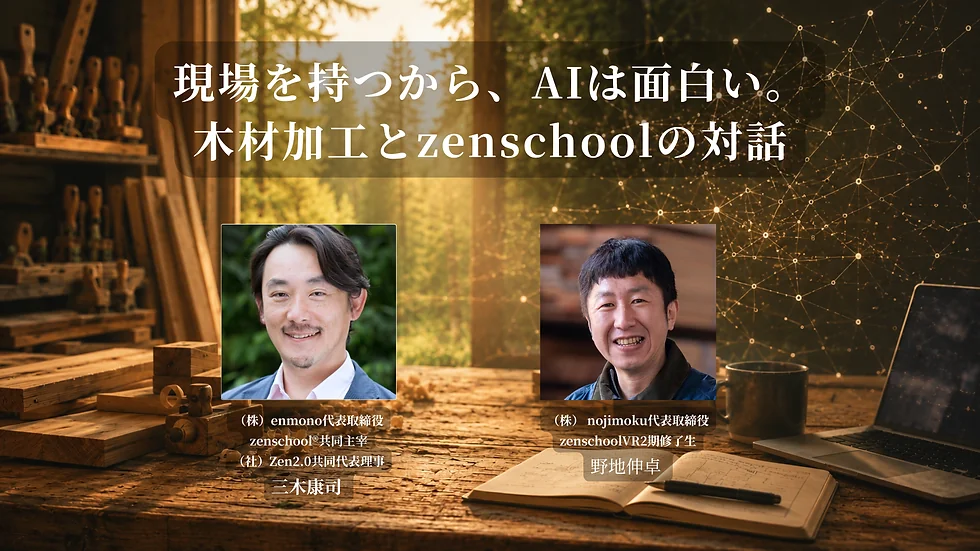
Having a Gemba Is What Makes AI Interesting: A Conversation on Woodworking and zenschool
Our conversation with Mr. Noji at a talk event is written up in an article on note.
Tell us just one “scene” from your company.
We will not suddenly start talking about contracts or a company-wide rollout.
Work that only the president can decide.
Work that stops when a veteran is away.
Work where the same problem repeats again and again.
Work where AI or DX was introduced but is not used at the gemba.
Just one of these is fine.
We start by looking together
at where your gemba knowledge is buried.
The two who conceived GEMBA-OS™
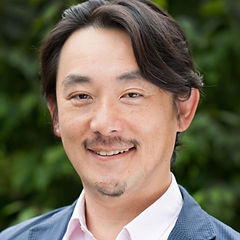
Kouji Miki
Kouji Miki
Representative Director, enmono Co., Ltd.
He has spent years supporting new business development and working alongside the owners of small and medium-sized companies, and practicing dialogue as a co-organizer of zenschool.

Shigeru Utsunomiya
Shigeru Utsunomiya
Director and CTO, enmono Co., Ltd.
Building on his production engineering experience on the manufacturing floor, he works on gemba observation, structuring operational information, and the use of AI.